





Enter your e-mail address below to subscribe or unsubscribe from the mailing list.

subscribe
unsubscribe

(view privacy policy)

Read Past Newsletters

Groundnut Soup

Groundnut Soup: Location, Location, Location

02/14/2010

Groundnut Soup
February 14, 2010

Location, Location, Location

As all writers know, writing is not like riding a bike. Every time you sit down to write, it feels like the first time. The same anxieties, the same doubts, the same indecisions that you had in the past happen again. It’s no wonder that so many talented and brilliant writers stop writing. I think it takes a kind of stubbornness and unwillingness to let go to be a writer. These traits are not necessarily healthy or admirable, but they are necessary to write. This is especially true when you haven’t written for a period of time. The more time that lapses between the last time you wrote and the next, the harder it becomes to manage these feelings and to move past them. When I write every day, my doubts are more like echoes of strict teachers who have no confidence in me. When I don’t write for several days, these apparitions become more and more material. And the longer I wait they emerge almost into an actual physical presence that is standing in my way. A barrier to my consciousness where perhaps my writer’s self or my voice takes refuge.

So now after two weeks of not writing, I am sitting down to write. I have tried to make the circumstances as pleasant as possible in order to facilitate my re-entry. Still, it is not easy. Over the past week, I have spent a day in a public ward of a remote village hospital because of food poisoning. My friend Ranjan believes it was the bad coconut sambal. He says that the fish curry is cooked so long that anything back would have been killed. The sambal is made from fresh coconut, chillies and other things. The hospital was a bit of a nightmare by U.S. standards. I was placed in a ward with 30 metal beds circa 1930. Thin plastic mattresses laid on each metal stretcher. Over these mattresses was a single sheet. When I arrived, the bed I was to use had someone in it. They moved this ancient man further into the ward. The sheet was covered in blood. They pulled the sheet from the bed and without wiping down the mattress replaced it with “fresh” linen. Smeared blood was on the floor about the bed. I stepped around it to lay down. At the end of the ward a stack of dirty bed pans waited to be cleaned. Feral dogs wandered aimlessly through the open space. Hundreds of flies swarmed everywhere. Since I had food poisoning, I had to use the toilet often. A row of stoop toilets were located out back. A man with a hose would occasionally come by and wash them down.

During the day I spent there, I was given three IV’s of saline solution. Someone from the university—the chairman of my department, the caretaker of the house I live in, the campus nurse—never left me alone. They sat vigil beside my bed and made sure I took my medicine and drank liquids. The doctors and nurses gave me excellent care despite the conditions. They clearly knew what they were doing. But in Sri Lanka, and in many countries, everything else is the responsibility of friends and family. At every bed in the ward, the patient had someone to attend to them—to wash them, to give them the medicine, to feed them, to change their linens, to give them clothes or blankets. Without someone there, I am certain there would have been little hope of these patients surviving. The nursing staff was just not capable with all their duties to provide such care. So I was fortunate that the people at the Sri Palee campus showed up.

When I thanked Ranjan and everyone else for their support, he said that this is what Sri Lankans do. When someone is sick they go to the hospital and take care of them. He said that when he lived in Japan it was just the opposite. You were not supposed to visit someone until they were well again. The Japanese did not want to be seen when they were vulnerable and ill. He found this incomprehensible and had difficulty restraining himself when a friend was sick.

After a day in the ward, I was still very sick, but I was strong enough to sit up and walk on my own. I knew that if I was to get better I would need to get out of this hospital. I had a cycle of antibiotics with me that I would continue to take for several days. The stress of the ward—its noise, its strangeness, its lack of comfort—were starting to get in the way of my recovery. So again doctor’s advice I checked myself out and returned to the Sri Palee campus. That night Samanth, the caretaker, insisted on spending the night in my room to ensure that I was okay. I equally insisted that he sleep in one of the other bedrooms in the house. He reluctantly agreed, but then he came into my room once an hour and turned on the lights and asked me if I was okay. My sleep or whatever you might call it was at the minimum fitful. The next morning at least thirty people visited me to ask about my health.

Apparently, the entire campus was in an uproar about my illness. This didn’t surprise me since anything that I do on this remote campus is cause for discussion. If I walk to town in the evening, I hear about it from students the next day who did not see me. By noon, however, I realized that I wasn’t going to recover without some privacy. Feeling so weak and raw, I didn’t think I could recover in such a public place.

The Fulbright Commission got me a room at a special rate at the Cinnamon Lakeside Hotel. Usually, I hate the anonymity and shopping-mall atmosphere of five star hotels around the world because they place you in the bubble of a completely constructed environment. But at this point, I needed to be in a bubble. I needed to baby myself and consume the bland Euro-American cuisine served up in their restaurants. I made a reservation for four days, but I was unsure if I would be able to last more than a day.

I arrived at the Cinnamon after a tense negotiation with a tuk-tuk driver who wanted 800 rupees for a ride that should cost 100. I bargained him down to 200 so he let me off across the busiest avenue in the city so that I have through walk into the sprawling hotel entrance on foot. Justice, who knows. When I went inside, they didn’t have my reservation. It turned out there were two Cinnamon Hotels in Colombo, the Grand and the Lakeside. I had mistakenly gone to the Grand, which was rather grand. I took a Cinnamon taxi to the Lakeside which cost me another 500 rupees for a ride that in a tuk-tuk would have been 100. From the street the Lakeside seemed, well, less Grand. I was a bit disappointed, but finally checked in, made my way up to my room and fell asleep.

Normally, I hate pools and swimming, but this morning I went down to the pool at 9am and had breakfast. I took in a swim and read the Sri Lankan Daily Mirror. In a long article on the arrest of General Fonseka, it mentioned that just two weeks before the general was holed up in this very hotel with 400 army deserters after he lost the presidential election. The hotel was surrounded by government police, and the president was claiming that Fonseka was planning a coup.

By now, Fonseka and about 1,000 of his supporters were in jail. At least four journalists were also in jail and another four had gone missing. Missing journalists was not new in Sri Lanka. Since President Rajapaksa came to power four years ago at least 14 journalists have been jailed or disappeared in the country. Most prominently, Tamil journalists working for the Outreach Sri Lanka website have been arrested, with J. S. Tissainayagam being sentenced to 20 years in jail for his postings.

With the state of Sri Lankan journalist the way it is now, it is hard for me or really anyone to know whether General Fonseka was planning a coup. Fonseka certainly could be considered a war criminal for many of the atrocities he committed during the recently ended civil war against the Tamil Tigers. He also threatened to execute several of the governments cabinet ministers if he was elected president, but Rajapaska is not gilded lily himself. He is just likely to fabricate the coup attempt to get rid of his rival.

So this Saturday morning as I sipped a freshly brewed cup of coffee (and not Nescafe) while trying to baby myself and recover, I looked up at the balconies overlooking the wide, infinity pool and could imagine Fonseka standing up there either contemplating murder or planning some sort of “exit strategy.” When my neck tired and I lowered my gaze, I saw across the shimmering, sunlit water a beautiful woman disrobing. She unzipped her incredibly tight jeans and wiggled them down to her ankles. Then she crossed her arms and grabbed the hem of her spaghetti-strapped tank top. In one fluid move, almost a pirouette, she lifted the fabric up and over her head, dropping in a pile with the jeans. She shook her long dark locks out, shoved on a pair of bubble sunglasses and set to reading a fashion magazine. As I watched her settle into the lounge and bake in the hot morning sun, I tried to reconcile the simultaneous nature of the Cinnamon Lakeside Hotel as a staging ground for a military coup and a playground for the vain and gorgeous.

The incongruity of these two moments made it certain I would stay the full four days at the Cinnamon Lakeside, or at least until I could gather the words to describe it.

Selected Works

3. Poetry
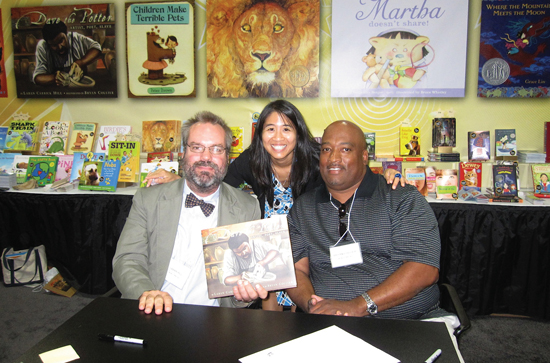
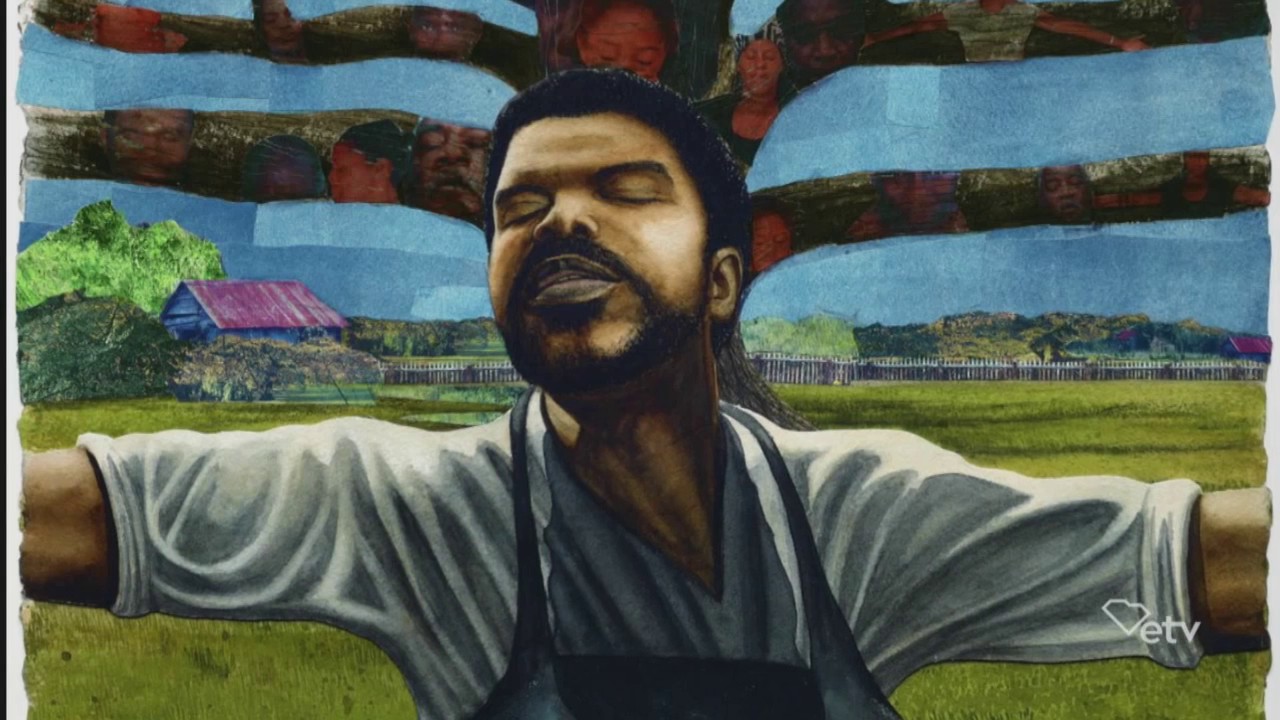
Dave the Potter
A picturebook poem describing the life of the slave potter Dave. Illustrated by Bryan Collier.
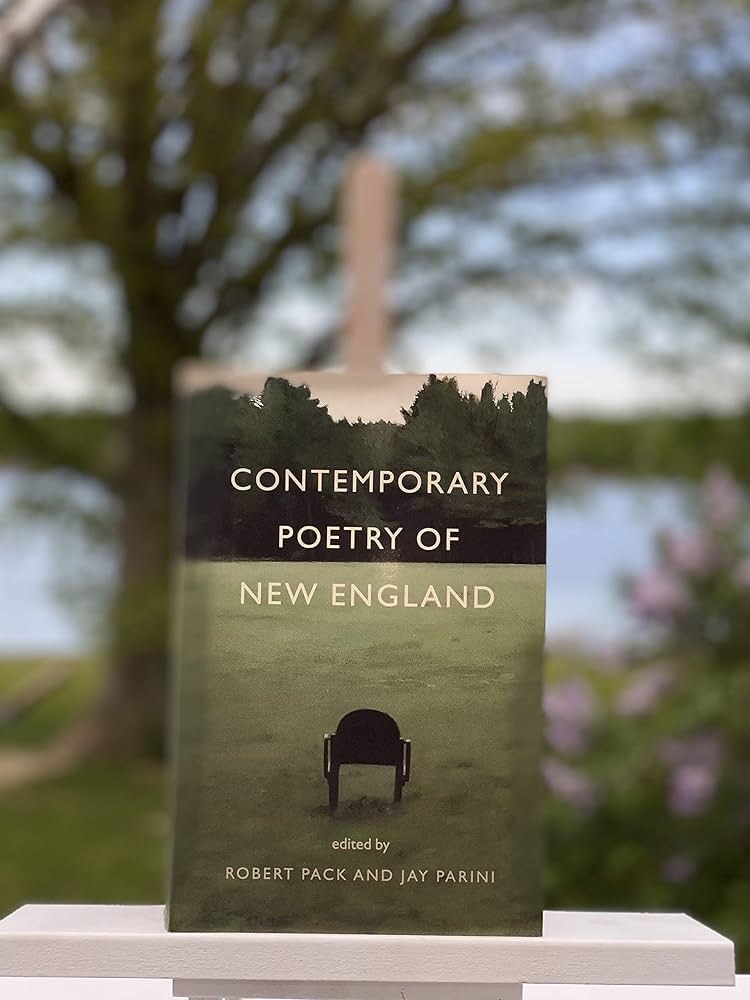
Contemporary Poetry of New England
“Contemporary Poetry of New England offers a vivid portrait of a region, its colors and smells, its physical and emotional textures, and the people…. It presents a range of poets, few of whom would call themselves a “region poet,” although each has taken to heart in a private way Frost’s haunting dictum: ‘Locality gives art.’”
--from the Introduction
1. Nonfiction
DJ Kool Herc
The first picturebook biography of the founder of rap and hip hop, DJ Kool Herc!
America Dreaming: How Youth Changed America in the 60s
"Phenomenal."–Howard Zinn "Excellent."–New York Times Book Review
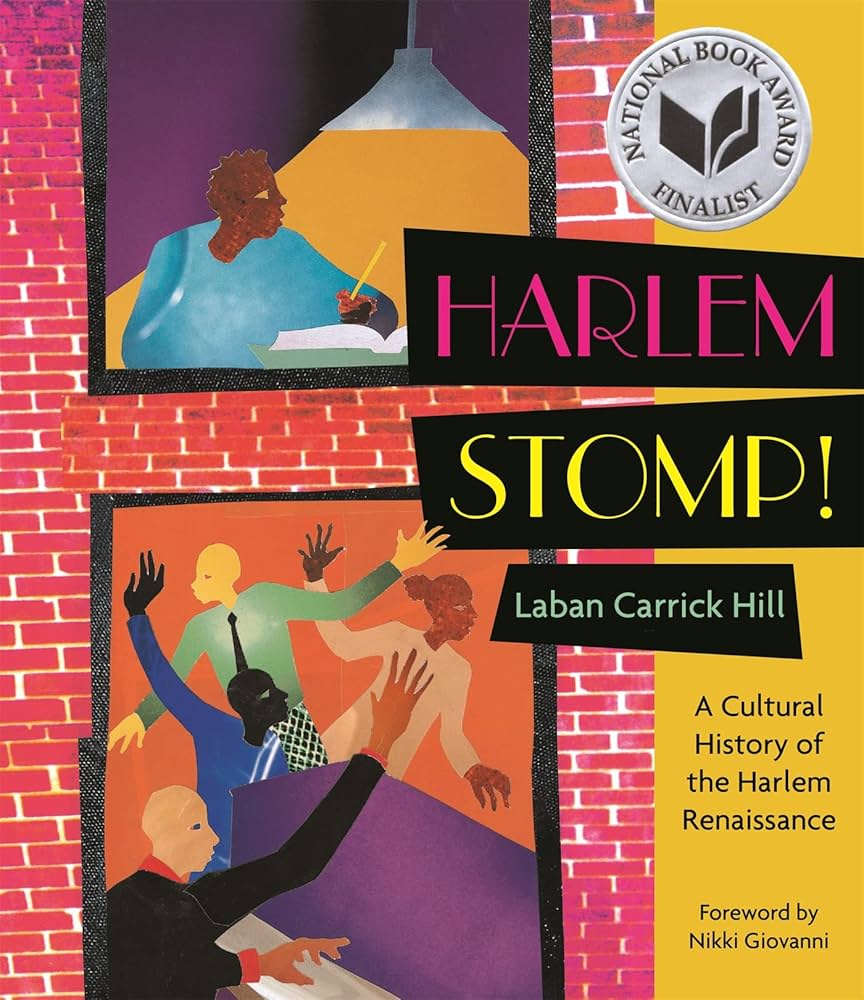
Harlem Stomp! A Cultural History of the Harlem Renaissance
Harlem Stomp! is a wonderous new book: it celebrates a time, a place, an energy, and a people who refused to be held back and so they created a culture the entire world is still reeling from.”
--George C. Wolfe, writer, director, and producer of the Public Theater, NYC
2. Fiction
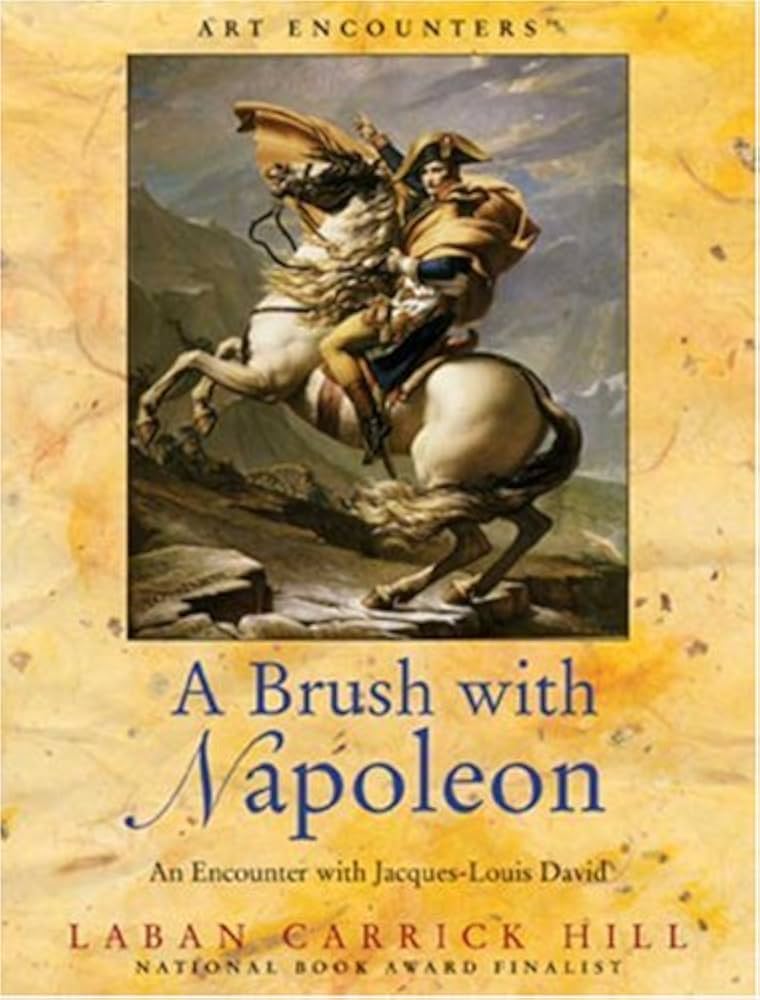
A Brush with Napoleon
A seventeen-year-old is plucked out of the Grande Armee to sit in place of Napoleon for a portrait of the Emperor by the artist David.
Casa Azul
"I felt like a kid reading every word on the page! I liked the strains of "magic realism" coming through in Frida's house! Children will relate to this very much! The story is charming and reads like a thriller." –Margarita Aguilar, Assisant Curator, El Museo del Barrio
4. Middle Grade Series
Xtreme Mysteries
These kids love extreme sports--snowboarding, skateboarding, rock climbing, wake boarding--and are ready to fight when the right to do their sport is threatened.