








Enter your e-mail address below to subscribe or unsubscribe from the mailing list.

subscribe
unsubscribe

(view privacy policy)

Read Past Newsletters

Groundnut Soup

Groundnut Soup: It's All Relative

01/18/2010

Groundnut Soup
January 16, 2010

I didn’t realize what it meant to be flying to Kuwait until I arrived at the Dulles Airport gate. It only came to me when I saw the four hundred or so large, beefy men, in their forties and fifties, gone slightly or more overtly to seed wearing Carhardt carpenters pants and Budweiser t-shirts, and young men in their twenties, featuring “high and wides” and digital camo backpacks. I counted four women in all. Until this moment the consequences of Kuwait being the launching point for the wars in Iraq and Afghanistan never really hit home.
Just the day before I had listened to Terry Gross on “Fresh Air” interview a journalist about the dangers of unsupervised contractors in Iraq and Afghanistan. And here they were. Men in their forties and fifties plowing through a mountain of MacDonald’s and fast food meals like this would be their last for a very long time. They moved amongst each other with the camaraderie of a NASCAR tailgate party.
At first, I had a sense of dread as I scanned the waiting area. I wasn’t worried abut a terrorist bomb secreted someone’s shoe or underwear. Hell, these men face I.E.D.s almost daily. No, I dreaded having to sit in economy class next to a four hundred pound truck driver in the center seat next me, his girth spilling over not only onto me, but into the aisle beyond. I could see myself suffocated by the time the landing gear drops. A twelve-hour flight next to a man who made the Michelin Man appear undersized caused me to almost pay a thousand dollars to upgrade to business class. The announcement that there were still three business class seats available ten minutes before boarding surely tempted me, but to be honest, I’m a cheap bastard. I reason I can endure almost anything for twelve hours, even at my advanced age of seven months shy of fifty.
I held steady and luck won out.
My aisle seat was next to a tall, slight young man, no more than 25 years old. Even better, he immediately went to sleep and slept almost the entire twelve hours, skipping dinner and breakfast. He wasn’t sporting a “high and wide” so I wasn’t certain if he was military or not, but he certainly adhered to the military dictum of sleep when you can.
Before we took off, I pulled out my Amazon Kindle. I love not having to haul twenty or so books in my suitcase when I travel for six weeks or searching desperately for a bookstore with English language books in a place where there aren’t even bookstores. So I pull out my Kindle and immediately the guy across the aisle says, “Hey, buddy.”
I looked over.
“I was thinking of getting one of those.” He was a man about my age, in his early fifties, grey hair, about 5-foot-9. He looked about as threatening as a country pastor.
I went into my schtick about how great Kindles are and then I noticed he held a mass market paperback of Stephen Hunter’s I, Sniper. I turned on my Kindle and showed him my copy of the same book. As an author Stephen Hunter holds a special place in my heart because his novel Dirty White Boys got me through a particularly bad stretch of depression in the 1990s.
It was a conversation starter. Bob told me how he was returning to Iraq for four months to pay for his daughter’s college tuition. He said it had felt great to be able to write a check to pay for the spring semester without taking out loans. This was his second trip to Iraq, and he thought it would probably be his last.
When I told him I was going to Sri Lanka he said he’d never go there. He said that even though the Tamil Tigers were defeated he didn’t think the tension between the Buddhists and Hindus would ever really end. It was then that I asked him what he did in Iraq, thinking that he must be some sort of desk jockey ensconced deeply on some military base. But it turned out he was a retired narcotics police officer from Syracuse. He told me his undercover car was registered under the pseudonym Bob Lee Swagger, after the mildly sociopathic Vietnam vet sniper in Stephen Hunter’s novels. We both agreed that Hunter’s best was his Swagger first novel, Point of Impact.
Then he went on to explain that he was embedded with an army patrol training the Iraqi police. According to Bob, there was nothing safer than having a dozen heavily armed men whose sole duty was to “protect the old guy.” Seriously. He never felt in danger.
As we began to descend into Kuwait City, my neighbor finally woke. I asked him if he was going to Iraq, and he said, no, Afghanistan. It was his fourth deployment. He told me a story about being in a bizarre and looking up on a hill and seeing a massive fort. He said his translator told him that since the 9th century whoever controlled that fort controlled the entire region.
It took a moment for me to realize that he wasn’t in the bizarre shopping, but was on patrol. I interrupted him and asked stupidly, “So you go on patrols. Is that dangerous?”
“Well, it’s all relative.” He turned and looked out the window.
Relative to what? I wanted to ask. Relative to shopping at the Gap in the local mall?

***

Stepping off the plane, a crowd of people holding signs for Dynacorp and Force Protection stood at the gate, having gotten past customs to meet their people as they stepped off the plane. It’s all relative.

***

The flight to Dubai was empty. I wonder if a year or two before this flight would have been packed since Dubai seemed to be the center of the financial boom. Now that the emirate is teetering on bankruptcy, no one seems to be headed there. The flight was short and as we descended into the airport I looked for the world’s tallest building, but it was past midnight and the lights were turned off.
On the flight from Dubai to Colombo, I watched a Sikh action movie and was amazed at how the actors could open a can of whoopass on each other without losing their turbans. Even the hapless bad guys being kicked on the ground kept their turbans firmly in place.

***

First sign that I was entering a new place

On Sri Lankan Airlines the salad contained whole raw birds nest chilies.


Selected Works

1. Nonfiction
DJ Kool Herc
The first picturebook biography of the founder of rap and hip hop, DJ Kool Herc!
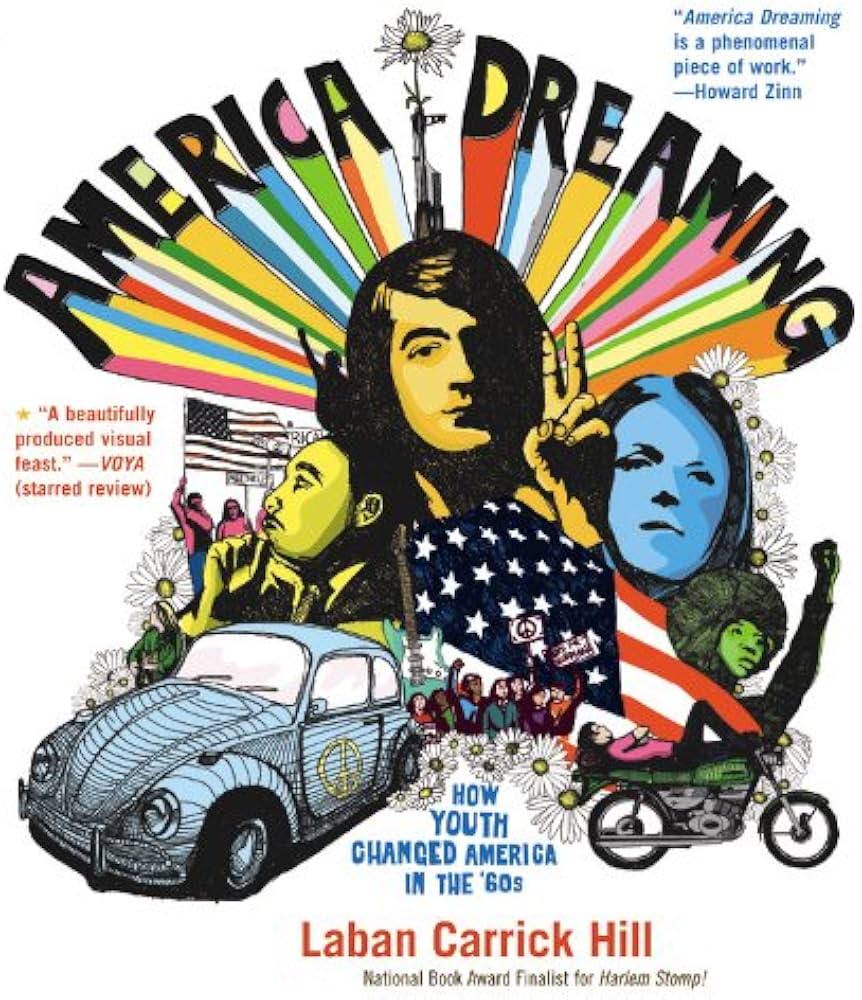
America Dreaming: How Youth Changed America in the 60s
"Phenomenal."–Howard Zinn "Excellent."–New York Times Book Review
Harlem Stomp! A Cultural History of the Harlem Renaissance
Harlem Stomp! is a wonderous new book: it celebrates a time, a place, an energy, and a people who refused to be held back and so they created a culture the entire world is still reeling from.”
--George C. Wolfe, writer, director, and producer of the Public Theater, NYC
3. Poetry
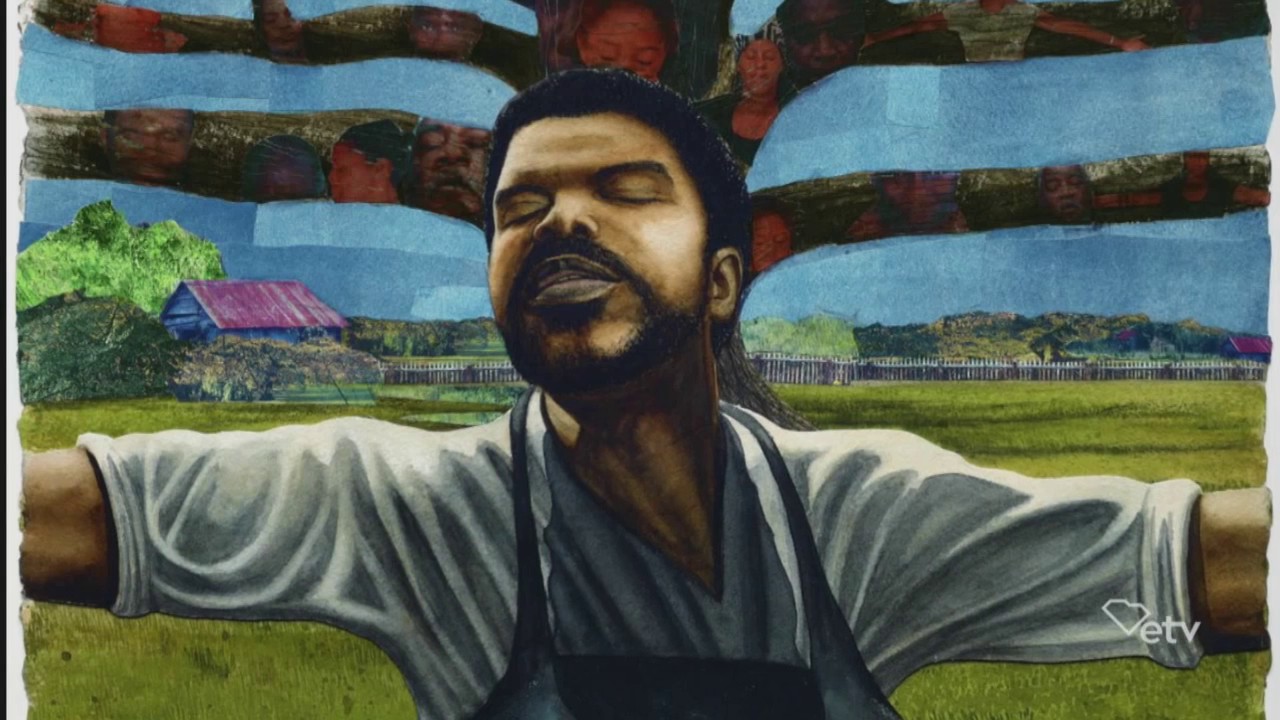
Dave the Potter
A picturebook poem describing the life of the slave potter Dave. Illustrated by Bryan Collier.
Contemporary Poetry of New England
“Contemporary Poetry of New England offers a vivid portrait of a region, its colors and smells, its physical and emotional textures, and the people…. It presents a range of poets, few of whom would call themselves a “region poet,” although each has taken to heart in a private way Frost’s haunting dictum: ‘Locality gives art.’”
--from the Introduction
2. Fiction
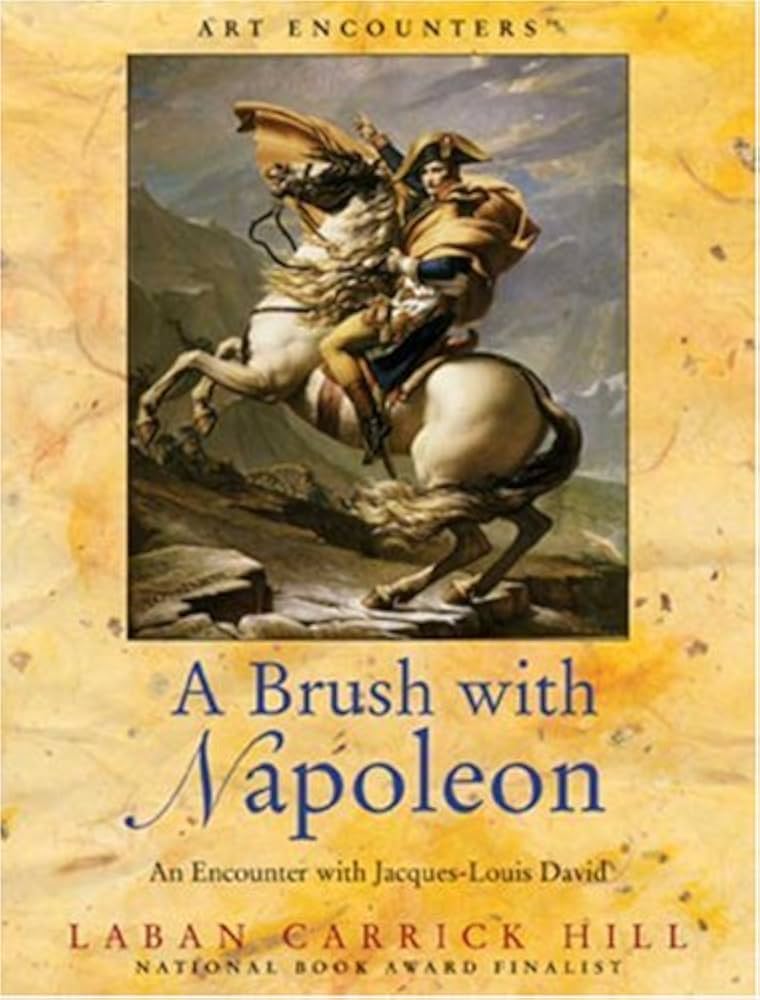
A Brush with Napoleon
A seventeen-year-old is plucked out of the Grande Armee to sit in place of Napoleon for a portrait of the Emperor by the artist David.
Casa Azul
"I felt like a kid reading every word on the page! I liked the strains of "magic realism" coming through in Frida's house! Children will relate to this very much! The story is charming and reads like a thriller." –Margarita Aguilar, Assisant Curator, El Museo del Barrio
4. Middle Grade Series
Xtreme Mysteries
These kids love extreme sports--snowboarding, skateboarding, rock climbing, wake boarding--and are ready to fight when the right to do their sport is threatened.