











Enter your e-mail address below to subscribe or unsubscribe from the mailing list.

subscribe
unsubscribe

(view privacy policy)

Read Past Newsletters

Groundnut Soup

Ghana Journal: In and Around Sasakawa Chalets

24-Sep-2008

September 24, 2008

Ghana Journal: In and Around Sasakawa Chalets

1.
“You are quite hairy!”

Children are fascinated not just by my whiteness. Small children are always greeting me and seem to delight in my acknowledging them, especially when I speak to them in Fanti. The bolder ones will sneak up behind me and rub their palms against the hair on my arms. Some will even pinch my hair and pull. They are fascinated by someone having so much hair on their arms.

Since my chalet is the first in the row here at Sasakawa, often people come to my door to ask directions or looking for someone. Twice now I have answered the door shirtless and the people at the door have exclaimed at my hairiness. This morning, an older gentleman was clearly stunned by my hirsute demeanor. “You are quite hairy!” he repeated several times in stunned surprise. After a moment, he added, “Women will like you,” as he tried to recover from his embarrassment of speaking out loud what he was thinking. The compliment was much appreciated and I told him my wife feels that way.

2.
Sweeping

Each morning I am awoken by two distinct sounds. The first is the steady whisk of a broom at 6am. Kwesi, the man who is responsible for maintaining the chalets, first sweeps the entire area with a broom made of straw tied together with twine. Sweeping a home or compound at first light is an important ritual in Ghana because it is the only way to rid a place of the evil spirits who have gathered in the night.

The rhythmic strokes of Kwesi’s work always becomes a counterpoint to the stumbling clamor of vultures and crows that look to be wearing white vests. The crows’ chest feather are a bright white in sharp contrast to the deep, oiled black feathers covering the rest of their bodies. These giant birds land hard on the angled corrugated metal roof of my chalet. Their wide claws scrape the metal in a desperate search for some kind of purchase on the slick metal. They lurch and stagger back and forth across my ceiling like drunken sailors on leave.

3.
Socialist Bush

Last week as the world financial markets collapsed, the British economist Bernard Walters moved into the chalet next to mine for two days. One morning out in courtyard we talked about world markets. With an amused British detachment, he observed, “Well, Bush is turning out to be the most socialist president in American history now that he has nationalized Freddie Mac and Fannie Mae, and is proposing for the government to essentially buy the U. S. financial markets.” Despite my surprise at his split infinitive, I was delighted by his sharp political analysis. As we’ve seen throughout the Bush era, when you “go with your gut” and avoid any attempt to understand the complexity of something, you end up with blunt responses such as “shock and awe” as a war strategy in Iraq and a $700 billion no-strings-attached bailout for American financial markets.

As I take a bucket bath for the third day in a row, I am reminded how difficult the balance between free market and public support can be. Here in Cape Coast there are period water shortages. These shortages never occurred until the government privatized the public water utilities about a decade ago. The private corporation that took over water and sewage has never been able to provide an uninterrupted supply of fresh water to the city. Periodically sections of the city are without water for several days. Then the water is turned back on. The words of Economist John Kenneth Galbraith always echo in my thoughts as I scoop water from my baby blue plastic bucket and brace myself for its cold and bracing splash.

In his 1950s bestseller The Affluent Society Galbraith challenged Keynes’s economic theories about the primacy of affluence and “relentless consumption.” Galbraith argued that what Keynes’s notion of investing in production and acquisition really accomplished was an impoverished society, starved of public services. He wrote that in placing so much faith in the general curative powers of increased production, America was inviting grave social ills. In order for a community to function well, “even the stalwart conservative who dares not to venture out in the street at night, pays heavily for private security guards, thinks often about kidnapping and hesitates on occasion to drink the water or breathe the air, must, on occasion, wonder if keeping public services at a minimum is really a practical formula for expanding his personal liberty.”

I wonder if Bush had heeded calls to rescue homeowners over the past 12 months and not “gone with his gut” feelings about free markets, he would not be in the position of bailing out the oligarchs with $700 billion of the taxpayers money. Bush will go down in history as responsible for the biggest expansion of government in history, even greater than FDR during the Depression and WWII.

Selected Works

1. Nonfiction
DJ Kool Herc
The first picturebook biography of the founder of rap and hip hop, DJ Kool Herc!
America Dreaming: How Youth Changed America in the 60s
"Phenomenal."–Howard Zinn "Excellent."–New York Times Book Review
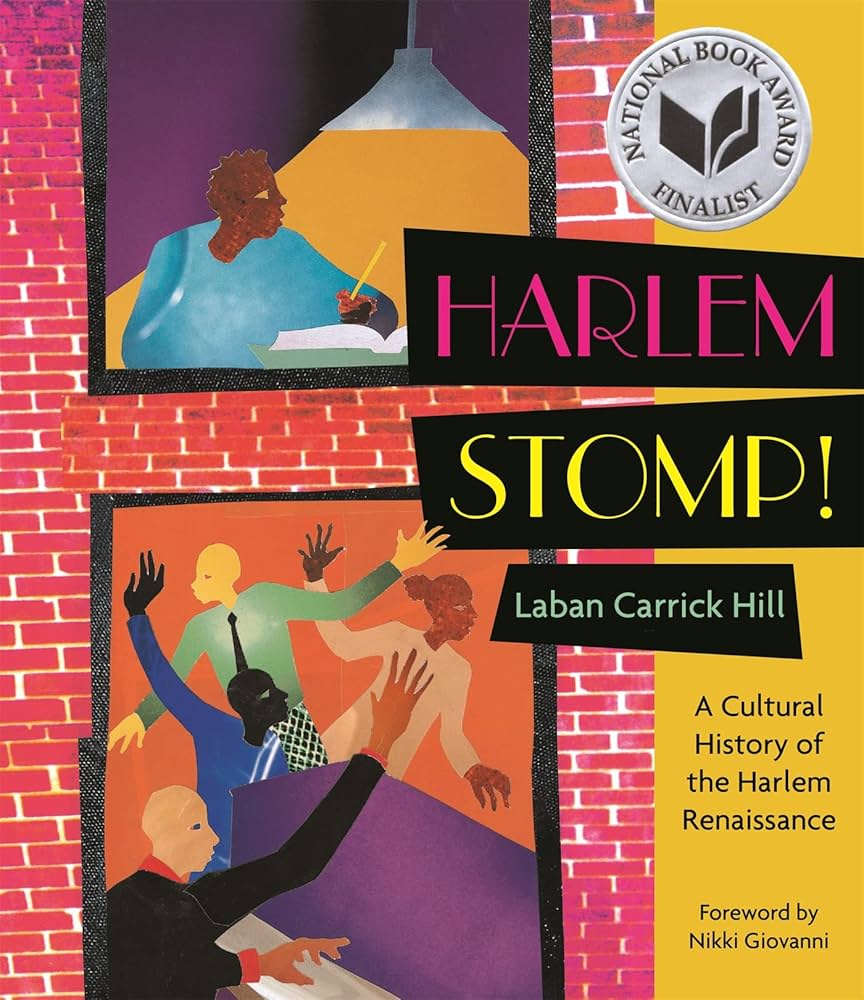
Harlem Stomp! A Cultural History of the Harlem Renaissance
Harlem Stomp! is a wonderous new book: it celebrates a time, a place, an energy, and a people who refused to be held back and so they created a culture the entire world is still reeling from.”
--George C. Wolfe, writer, director, and producer of the Public Theater, NYC
3. Poetry
Dave the Potter
A picturebook poem describing the life of the slave potter Dave. Illustrated by Bryan Collier.
Contemporary Poetry of New England
“Contemporary Poetry of New England offers a vivid portrait of a region, its colors and smells, its physical and emotional textures, and the people…. It presents a range of poets, few of whom would call themselves a “region poet,” although each has taken to heart in a private way Frost’s haunting dictum: ‘Locality gives art.’”
--from the Introduction
2. Fiction
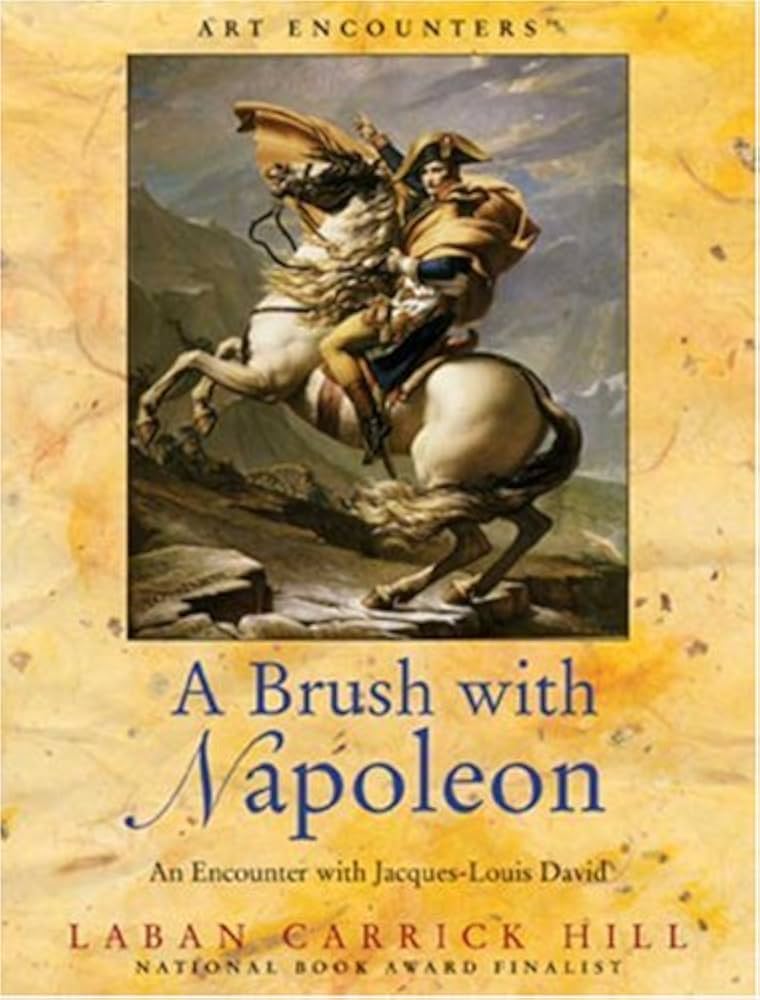
A Brush with Napoleon
A seventeen-year-old is plucked out of the Grande Armee to sit in place of Napoleon for a portrait of the Emperor by the artist David.
Casa Azul
"I felt like a kid reading every word on the page! I liked the strains of "magic realism" coming through in Frida's house! Children will relate to this very much! The story is charming and reads like a thriller." –Margarita Aguilar, Assisant Curator, El Museo del Barrio
4. Middle Grade Series
Xtreme Mysteries
These kids love extreme sports--snowboarding, skateboarding, rock climbing, wake boarding--and are ready to fight when the right to do their sport is threatened.