






Enter your e-mail address below to subscribe or unsubscribe from the mailing list.

subscribe
unsubscribe

(view privacy policy)

Read Past Newsletters

Groundnut Soup

Ghana Journal: Anafu Rites

12-Sep-2008

Anafu Rites

Link to Anafu Ceremony video: http://www.youtube.com/watch?v=n3OTXgqLxPg

As the Oguaa Fetu Afehye teetered on collapse after a thousand years of celebration, it was the priests who brought it back to life. They were not going to cancel any of the important ceremonies and rites for which they were responsible. After paying tribute to Nana Fasu at the lagoon, their next task was to honor the land that gives its fruits. Ironically, the shrine for this ceremony is in the center of Cape Coast in the middle of a paved road. Hundreds of years ago, when the British were laying the Itsin Road, the priests insisted that the road dogleg around the shrine. Today, the shrine is a walled circled about five feet in diameter with an ancient tree growing out of it. The paved road circles around each side of it. Tonight, the priests have blocked off a side street which usually is packed with market stalls selling everything from used clothes to pineapples to banku.

Around 8pm I meet up with Kwesi, the nephew of my Fanti teacher Rose, he’s a seventeen year old in his final year senior high school and has agreed to accompany me on some of my forays into the festival. We first head over to the parking lot of the Metro Transit buses where a stage and sound system have been constructed. A very funny MC, shouting in Fanti above the blasting music, is hosting a dance contest of teens. Everyone seems to know only one dance and that is a kind of bounce with a butt shake. As the audience cheers for the dancers they like, the losers are escorted off stage. One girl, around fourteen or so, is particularly awful. She is the one the crowd begins to champion, and after about an hour of dancing and cheering she wins. Her prize is a T-shirt, or rather a second T-shirt. All of the contestants have already received a T-shirt for being in the contest. She gets an additional T-shirt with one of the festivals sponsors emblazoned across the chest. Again, it’s Star Beer and the ever encouraging slogan “Share the Brighter Life.” Makes me want to pick up a beer for the first time since 1980. Not!

Around 9 pm I buy a stick of ginger toffee from a boy carrying a tray of the sweets on his head. The toffee is extremely spicy and made with fresh ginger. I have to buy a 500 ml pouch of water from another vendor who carries her wares in a bucket on her head. Water is sold not only in bottles but in plastic pouches. You bite a hole in the corner of the pouch and suck the water out.

We wander down the hill toward the Anafu shrine. The ceremony isn’t even close to being ready to begin. The street hasn’t yet been closed. I leave Kwesi at the parking lot rave and stroll over to a trade fair across the street on the walled grounds of a monastery. I pay my 50 pesawas (about 50 cents) to enter and wander around the stalls. There was a hodge podge of clothing stalls, health and herbal products and one especially interesting product—the “mobile toilet.” I overheard the sales rep tell a prospective customer, “Take it everywhere, even your bedroom.” Good to know.

Eventually, I left Kwesi at the rave. He was more interested in watching young girls shake their booty than in the Anafu rites. I walked back down the hill at around 10pm. The street was still not closed off, but people were unloading benches off a truck. I stood around and watched the priest and drummers arrive. After a while I spoke my pigeon Fanti to a man I had noticed on Monday night who seemed to be a leader. A number of the younger priests and drummers had come to him for instruction. The smile that spread across his face was filled with so much joy and openness that I was humbled. I spoke the few well-rehearsed phrases I had learned over the last week and referred to him as Lord, the most reverential name I knew. He invited me to sit with him on the bench at the edge of the circle. His name is Kodwo Odwom (pronounced Kojwo Ojwom) and he is a Όkyerэma, Fanti for master drummer. He has taught drumming, dancing and ceremonial rites for 30 years. It is hard to tell how old he is. He could be my age or he could be 60. He tells me that there are three traditional dances that are performed. Then there is a sacred dance that only priests perform except as blessing ceremonies like tonight. On these occasions anyone can do the dance.

Kodwo spoke English in an accent that was difficult to understand, but it was clear that he had as much trouble understanding my accent as well. He began to explain the ceremony and it’s importance to the harvest. After a short while, he suggested we walk. He took my hand in his and we strolled up Itsin Road toward the Anafu shrine. As we lightly held hands, we went as medze, or “soul brothers.” In Africa you often see close friends, men or women, holding hands as they talk and walk. He first spoke about joy and how this celebration was about joyousness. We weaved our way through the crowds as small children ran up to me and pulled the hair on my arms. Children are fascinated with how hairy my arms are. They can’t resist stroking it or pulling it to see if it is real.

After walking for a little bit, Kodwo suggests I buy him, his wife and two sisters a beer. I agree. This is a moment to celebrate. We pushed aside a couple of goats and turned into the Casanova Spot, a chop house near the shrine. I order beers for my new friends and a Quench for me. Quench is a malt soda produced by Guiness. It advertises itself as packed with vitamins and minerals. Since the label doesn’t list all its goodness, I have to take it on faith. Kwodwo’s wife and sisters sit a few tables away, while we continue to discuss the festival and the rites to be performed this evening. I order us a late evening meal of hkatenkwan (groundnut stew, a spicy chicken, peanut and vegetable stew) and kenkey (a fermented maize dumpling steamed in banana leaves). The waitress asks if I want my stew with okra. I decline. I have already learned that hkatenkwan with okra is a sticky, gooey mess. The okra is boiled to a mush and then pounded into a viscous substance that is stirred into the stew. It makes the stew so glutinous that it a chore to eat.

Like everywhere in Ghana, the music was turned up full volume. The bass of a thumping HipLife song, “Kwabena Kwabena” by Meye, drummed in our chests as we shouted across the table. Chickens pecked insects between the paving stones at our feet. Almost everywhere in Ghana, music blasts all day and evening. During festival everyone places their five-foot-high mega speakers on the street and cranks them up full volume. The mash of sounds and songs is a tsunami when it is mixed on the street with taxi’s honking and people shouting.

As we shared of bowl of stew, dipping our fingers in with pieces of kenkey, Kodwo told how in Fanti culture every object, living and not, is sacred and contains a god. When you say kubekor dua (coconut palm), you are not just referring to the tree soaring forty feet up but also to the kubekor dua god who lives in that particular tree. Tribal culture is steeped in exactly this kind of reverence toward their environment that is very much in sync with today’s most progressive notions of ecology. Unlike some other Western African countries, Ghana grows and harvests nearly all its own food. At some point nearly every town and village in Ghana pays tribute to the gods of the field, the forest and the sea. Cape Coast is perhaps the most important of these because as a coastal city it honors not only the fruit of the earth, but also of the sea. That is why he has traveled more than an hour from his village in the bush to participate. As the hour closes in on 11 pm, I pay and we return to the ceremony site. Kodwo finds us a seat with the other priests and priestess. When they hear that I have bought Kodwo and his family beers, others come up to me and tell me to get them a Guiness. I decline. The others joke with me and ask if I will dance tonight. I decline and tell them I am only hear to watch and learn. Eventually, everything seems to coalesce. The drummers are in place. Their drums are in tune. The priests and priestesses are all here. Finally, the head priest picks up his bucket of sand. The drummers begin beating their drums, and the head priest dances as he spreads a line of sand around the outer circle of the ceremonial space. Then he picks up the small broom, called a akόmfomena, to sweep the space clean of evil spirits. When he covers the circle with his dance several times, he hands the broom to another priest who repeats this ritual. After about four or five priests perform the dance, one priest tosses the broom into my lap. Everyone erupts into laughter. I learn that I am supposed to dance or pay someone to dance. I claim ignorance and refuse to do either. Someone steps into the circle with a bottle of gin. He pours a libation and chants. The drummers chant in return and continue to drum. Another dancer steps into the circle and performs the sacred dance. This will go on until dawn. After about an hour, Kodwo takes my hand and leads me from the circle. The drumming is so deafening that I can hear what he is saying.

A hundred feet from the ceremony, he introduces me to another priest who is a friend. Again, I don’t catch his name because the noise is just too loud. I understand that he is asking me if I would like to go for another beer. We stroll down Itsin Road toward the bay and turn onto a side street. About two hundred feet up, I am invited into an old colonial apartment building. In a hallway we stop at a door and remove our shoes. The new priest invites us into his apartment. It is a small room of about ten feet square and is furnished with a bed, a refrigerator, a couch and a large screen TV. Kodwo and the other priest talk in Fanti for a few minutes. The other priest does not speak English. It is clear that we have come to his room so that I can see it. He just wanted me to see him and his home. That is all. After ten minutes or so, we return to the street where we stop for drinks, beers and a liquor Mandinko for them, another Quench for me. We sit at the entrance to a small hut in plastic chairs. This stall is owned by the priest’s sister and she provides our drinks out of a small cooler. We sat and drank for a while. Kodwo paid for the drinks and we returned to the ceremony.

Selected Works

3. Poetry
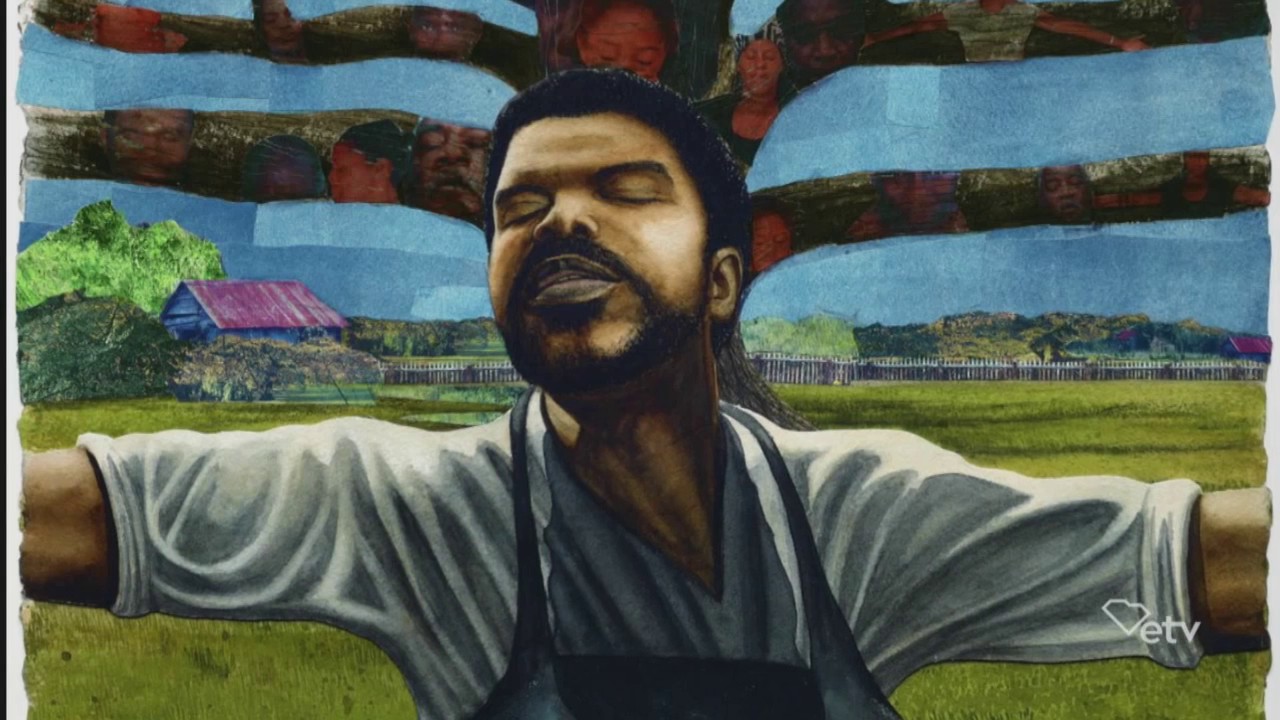
Dave the Potter
A picturebook poem describing the life of the slave potter Dave. Illustrated by Bryan Collier.
Contemporary Poetry of New England
“Contemporary Poetry of New England offers a vivid portrait of a region, its colors and smells, its physical and emotional textures, and the people…. It presents a range of poets, few of whom would call themselves a “region poet,” although each has taken to heart in a private way Frost’s haunting dictum: ‘Locality gives art.’”
--from the Introduction
1. Nonfiction
DJ Kool Herc
The first picturebook biography of the founder of rap and hip hop, DJ Kool Herc!
America Dreaming: How Youth Changed America in the 60s
"Phenomenal."–Howard Zinn "Excellent."–New York Times Book Review
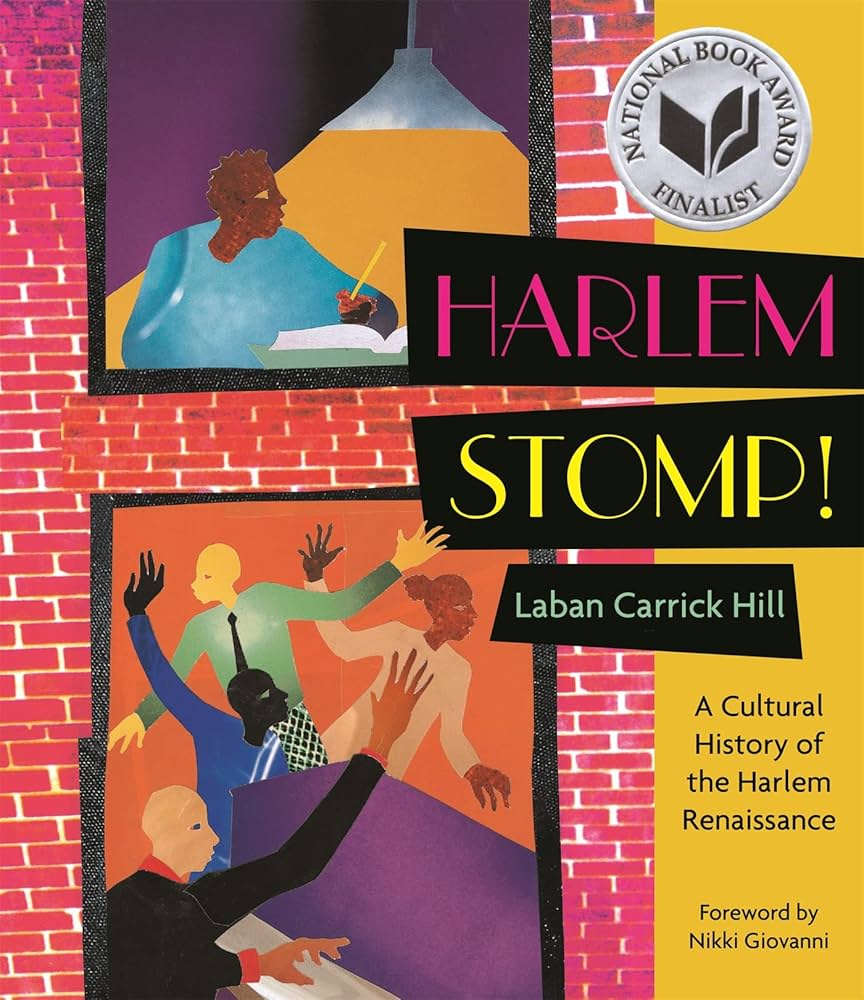
Harlem Stomp! A Cultural History of the Harlem Renaissance
Harlem Stomp! is a wonderous new book: it celebrates a time, a place, an energy, and a people who refused to be held back and so they created a culture the entire world is still reeling from.”
--George C. Wolfe, writer, director, and producer of the Public Theater, NYC
2. Fiction
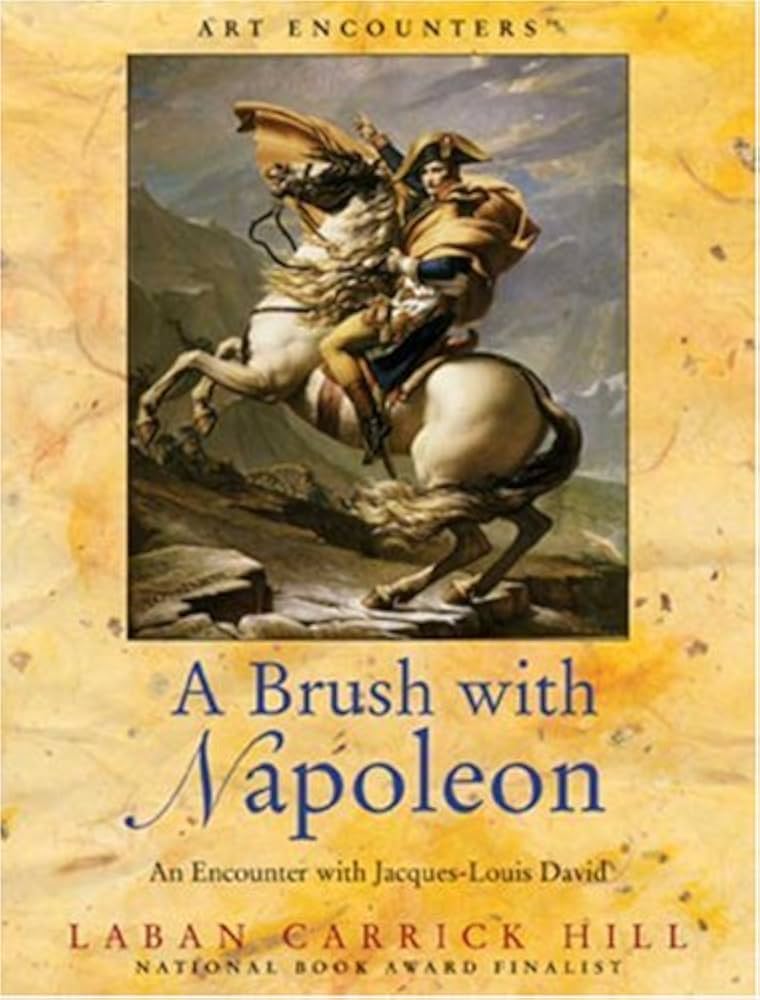
A Brush with Napoleon
A seventeen-year-old is plucked out of the Grande Armee to sit in place of Napoleon for a portrait of the Emperor by the artist David.
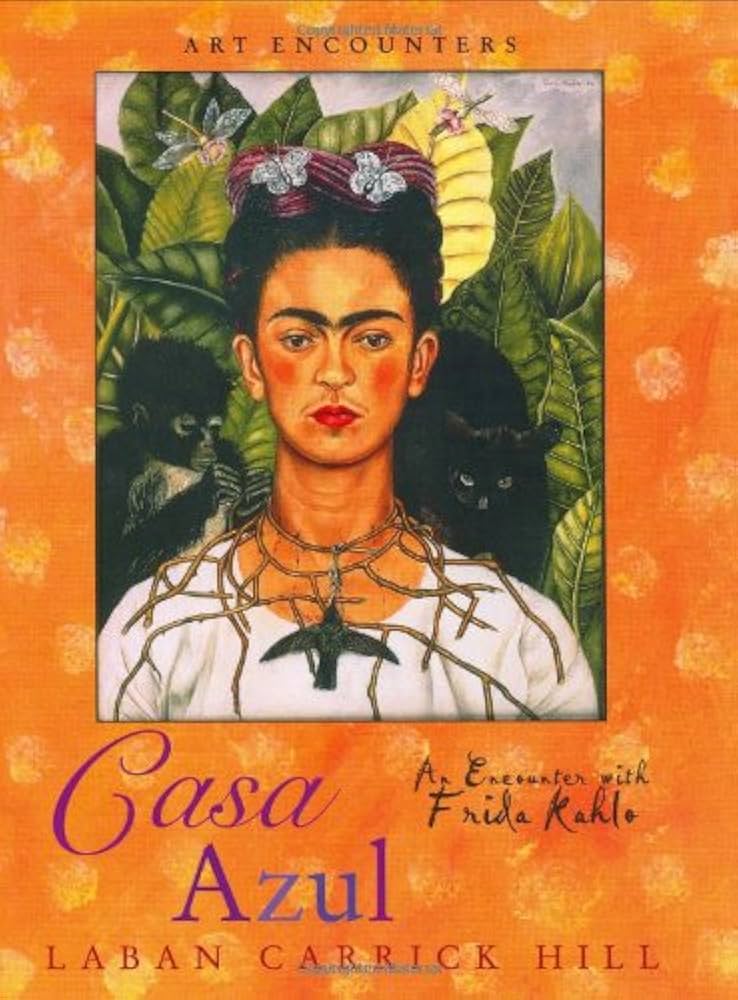
Casa Azul
"I felt like a kid reading every word on the page! I liked the strains of "magic realism" coming through in Frida's house! Children will relate to this very much! The story is charming and reads like a thriller." –Margarita Aguilar, Assisant Curator, El Museo del Barrio
4. Middle Grade Series
Xtreme Mysteries
These kids love extreme sports--snowboarding, skateboarding, rock climbing, wake boarding--and are ready to fight when the right to do their sport is threatened.